About JOC Project
The Japan Open Chain (JOC) project is designed to make people's lives more convenient through blockchain technology.
Japan Open Chain is designed as an Ethereum-compatible L1 blockchain infrastructure that enables businesses and individuals worldwide to conduct Web3 business safely and securely. This is achieved by addressing issues such as the speed of the existing Ethereum mainnet, high gas costs, and legal stability of operators. This chain is an open-endpoint consortium permissioned node blockchain, maintaining sufficient decentralization and high security performance and stability, while being operated in compliance with Japanese law by trusted Japanese companies.
Project Expansion
JOC is co-operated with major domestic and international companies, technology companies, and partners with global communities, expanding the chain to Japan and the world.
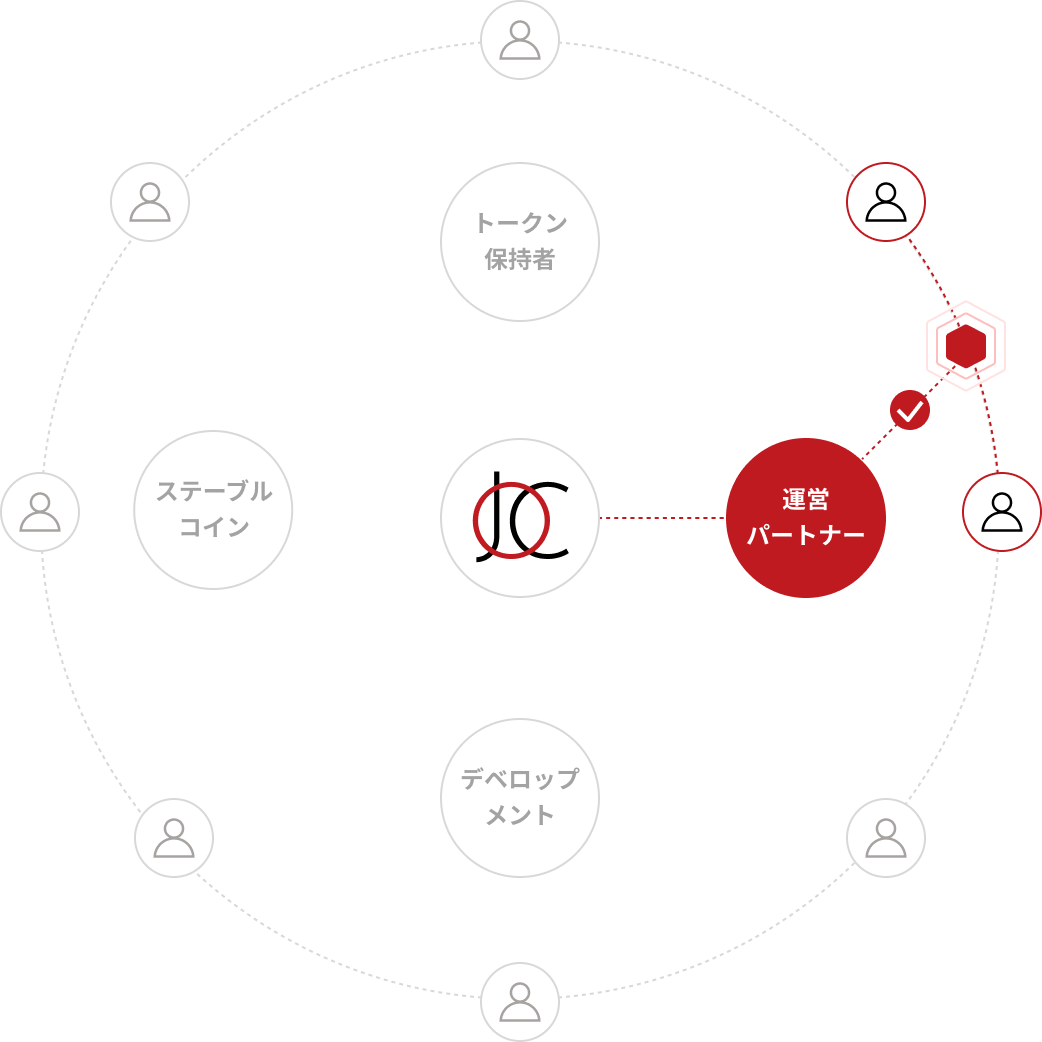
Operating Partners (Validators)
Verify the validity of transaction data on Japan Open Chain.













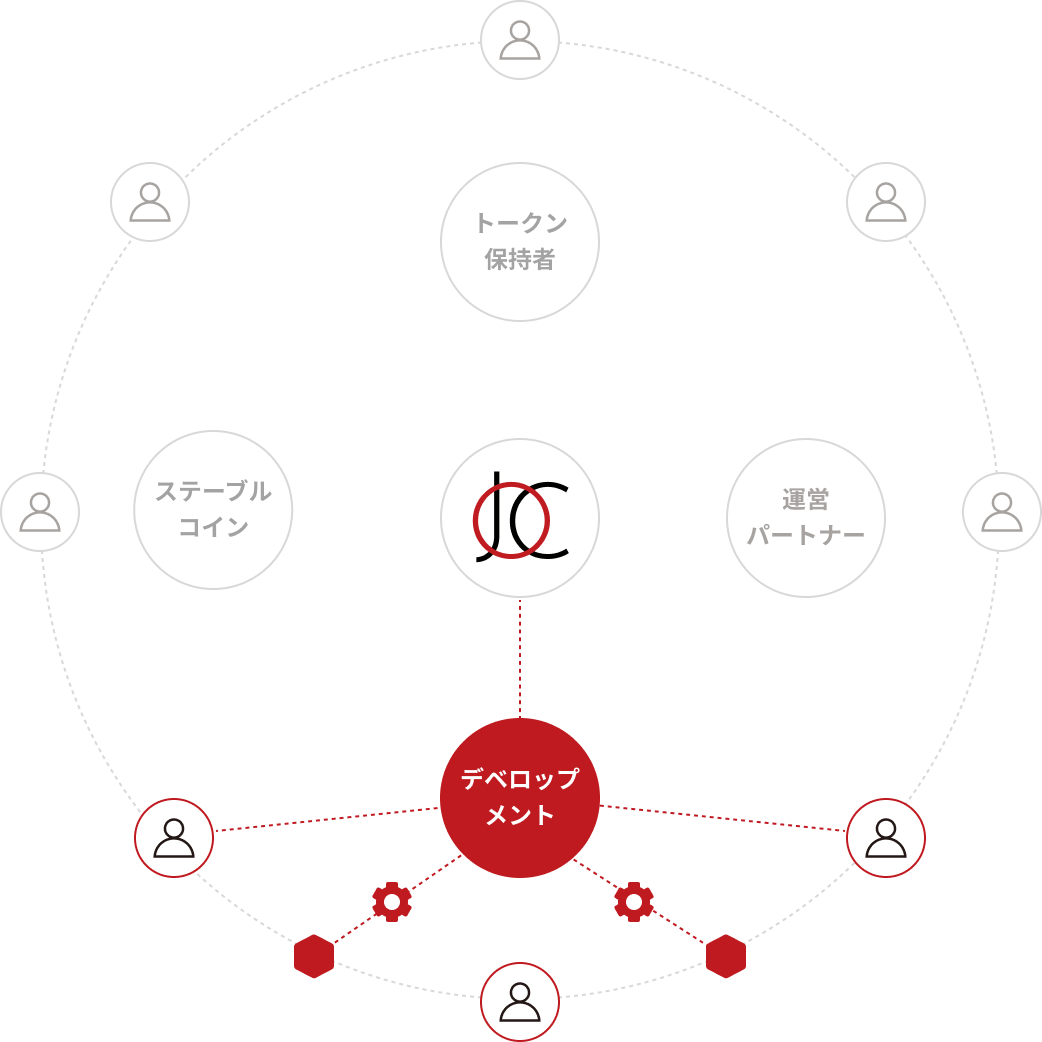
Development Partners
Partners who cooperate to develop JOC.














Interoperability Providers

Index Service Providers

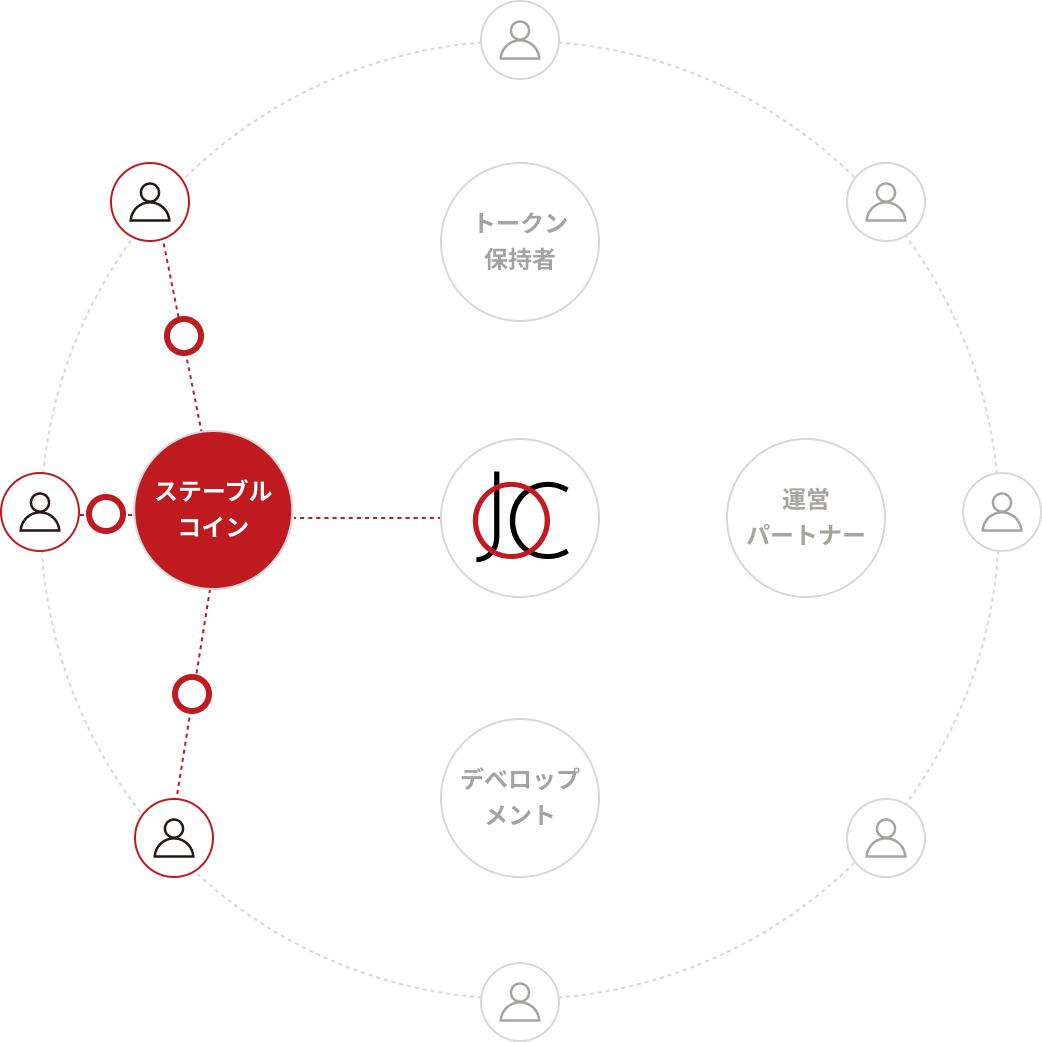
Stablecoin
Following Japan's 2023 legal reforms, a foundation for bank-issued stablecoins has been established. We are working with Japanese banks to build the next generation financial system.





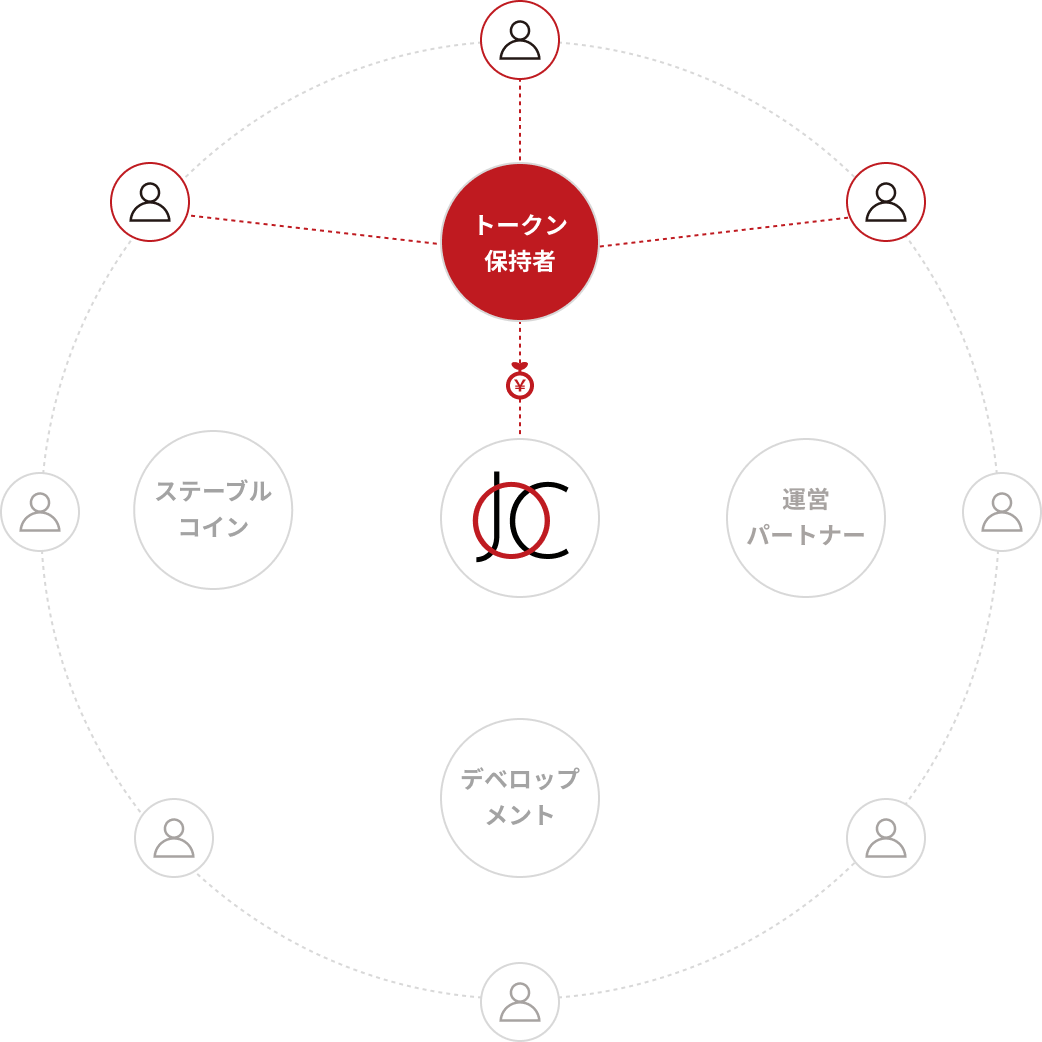
JOC Token Holders
JOC token aims to conduct an IEO through Zaif, a domestic cryptocurrency exchange, in 2024. After the IEO, you can support JOC as a token holder. JOC token functions as a cryptocurrency and is also used as a fee (gas fee) for transactions occurring on JOC.
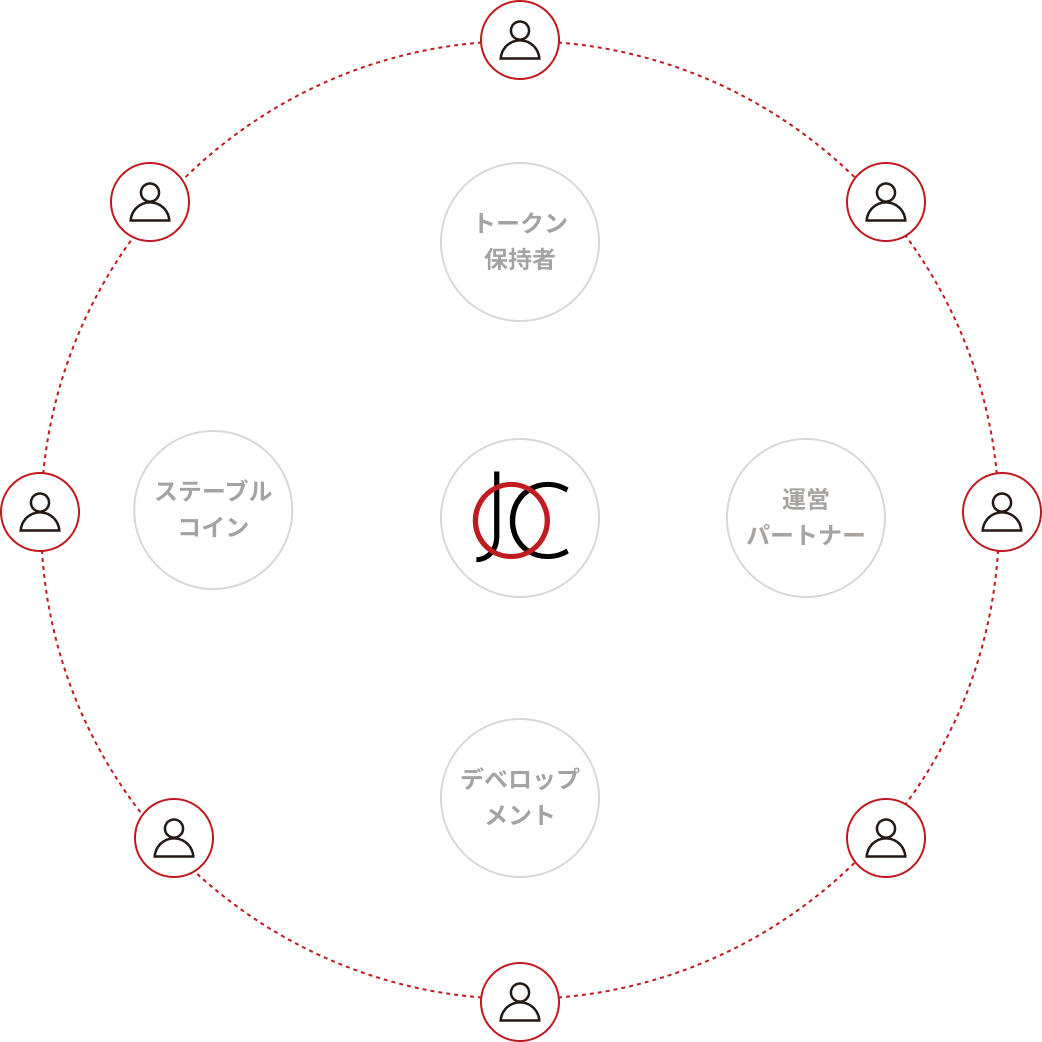
General Users
JOC can be used and provides benefits to users in various industries. People from all over the world can participate in the JOC network.
 Finance
 Regional Revitalization
 Information & Communication
 Distribution
 Manufacturing
 Games & Entertainment
 Marketing
Stablecoin Project
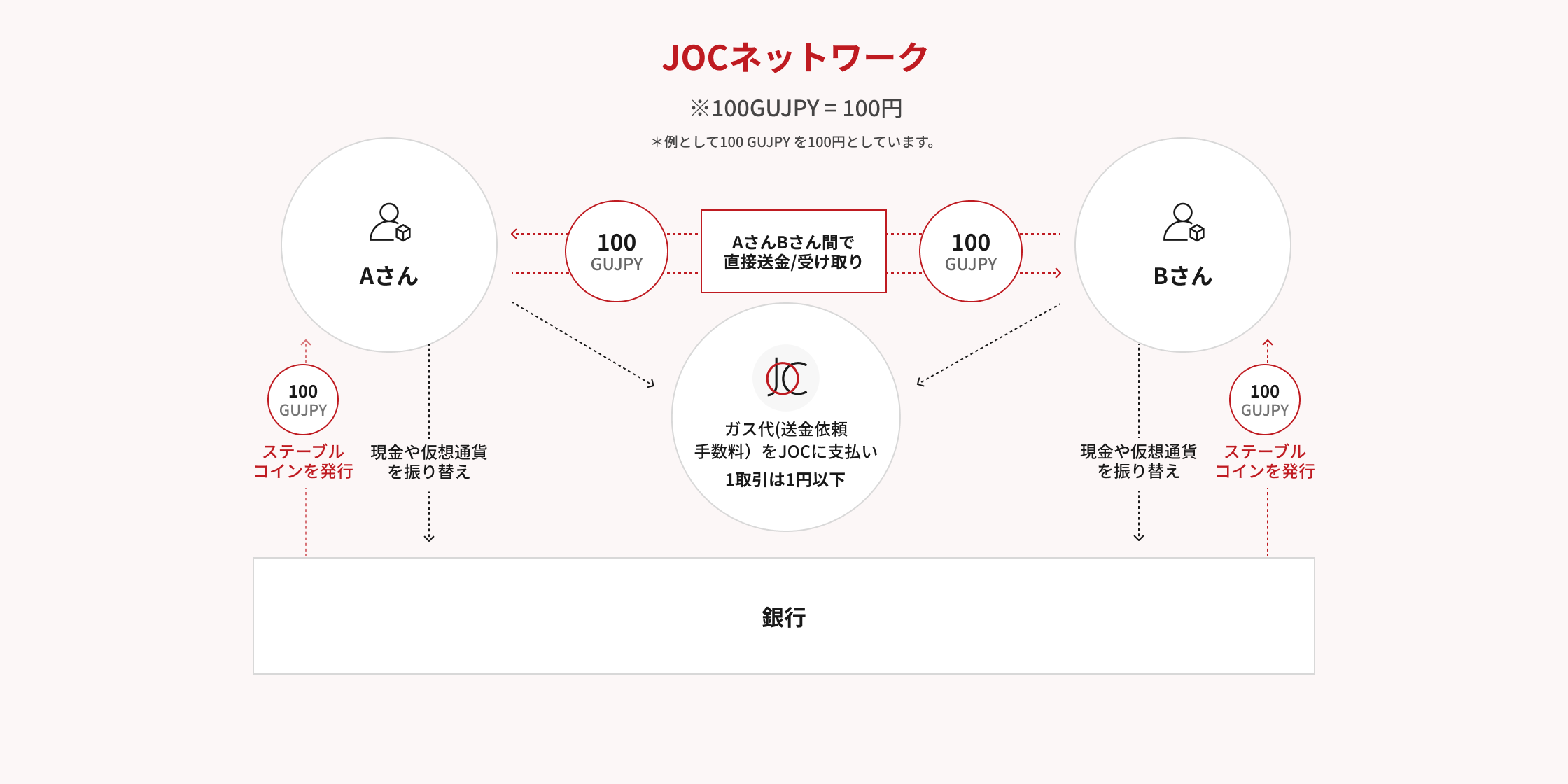
As part of the JOC project, we are advancing a stablecoin project to realize fast remittances and transaction fees of less than 1 yen.
What is Japan Open Chain?
Ethereum Fully Compatible Blockchain
Japan Open Chain is a fully Ethereum-compatible blockchain, allowing tools and smart contracts developed for the Ethereum protocol to be used as-is. While fully compatible with Ethereum, this project adopts the Proof of Authority algorithm instead of the Proof of Stake consensus algorithm adopted by the Ethereum mainnet.
Proof of Authority Consensus Algorithm
The Proof of Authority consensus algorithm is one of the official algorithms of the Ethereum protocol, similar to the Proof of Stake algorithm. As long as it is operated by trusted validators, it has the necessary and sufficient reliability and excellent scalability. Japan Open Chain adopts this Proof of Authority consensus algorithm while being operated by trusted Japanese companies, thereby ensuring reliability while significantly improving transaction speed.
Validators Composed of Diverse Japanese Companies
Japan Open Chain has resolved the weakness of the Proof of Authority algorithm - low validator decentralization - with validators composed of famous Japanese companies. It consists of 21 companies with high social trust in Japan, including Sony Group, Dentsu Group, universities, and listed companies ranked in Japan's top 10 in sales. To ensure validator diversity, not only large companies but also reliable crypto-related companies and startups that can contribute to the ecosystem in the future are planned to participate as validators.
High-Speed and Affordable Gas Costs
On Japan Open Chain, even complex contract executions like ERC20 token transfers can be processed at speeds of 400 TPS (400 times per second), or about 2,000 TPS for simple gas token transactions. This is 10 to 100 times more transactions compared to the Ethereum mainnet's 15 TPS.
Quick Deterministic Finality
In Ethereum 2.0, deterministic finality is achieved through the PoS algorithm, but it usually requires several minutes. Due to the nature of its algorithm, Japan Open Chain can achieve deterministic finality in 5 seconds. Such specifications are very important when conducting financial settlement transactions.
Optimal Ethereum-Compatible Chain for Finance and Business
In other words, Japan Open Chain is a chain that realistically considers the balance between decentralization and scalability, and is an Ethereum-compatible chain operated under Japanese law, which is politically and legally stable worldwide. It will be a safe choice especially for those who want to use Ethereum-compatible chains in the finance and business fields.